Stay Trendy Font Review
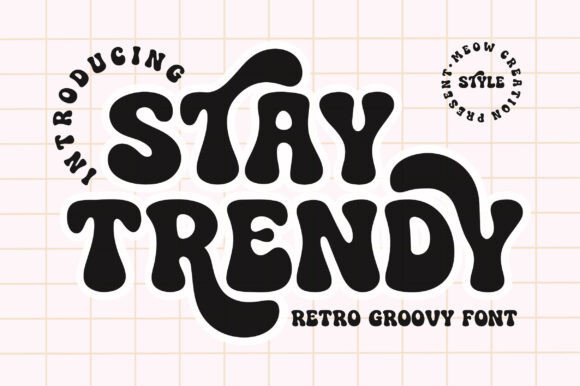
There I was, staring at a blank brand board, trying to find the right visual language for a new boutique coffee shop. The client wanted something that felt both nostalgic and modern, with a touch of fun. That’s when I pulled up Stay Trendy, a bold and playful retro groovy font inspired by the iconic 70s style. It had the right energy to bring that vibe to life.
Stay Trendy for Logo Design and Brand Identity
When I first tested Stay Trendy on a logo concept, it immediately stood out. The chunky shapes and smooth curves gave it a confident, eye-catching presence. It wasn’t just about looking retro—it had a modern edge that made it feel fresh. For a brand identity project, this font can be a strong foundation, especially when paired with simple, clean elements.
One thing I noticed was how well it balanced playfulness with professionalism. It didn’t feel too whimsical or childish, which is crucial for a brand that wants to maintain a sense of credibility. Whether it’s a café, a boutique, or a creative studio, Stay Trendy can help define a brand’s personality without overshadowing other design elements.
Stay Trendy for Packaging and Product Labels
I tried placing Stay Trendy on a packaging mockup for a skincare product line. The soft edges and groovy curves worked surprisingly well with the minimalist aesthetic of the brand. It added a warm, approachable feel that complemented the product’s natural ingredients. The font didn’t get lost in the design, even when used alongside subtle textures and pastel tones.
For product labels, Stay Trendy offers a unique way to stand out on shelves. Its boldness makes it readable from a distance, while the retro flair gives it character. It’s perfect for brands that want to make a statement without being overly loud. Just keep in mind that it might not work as well for smaller text sizes or when competing with a lot of visual noise.
Stay Trendy for Web Design and Social Media Graphics
In web design, Stay Trendy shines as a headline font. I used it for a homepage hero section, and it brought a dynamic energy that matched the brand’s playful tone. It looked great on large screens, but I noticed that it could become a bit overwhelming if overused. As a display font, it’s best reserved for key messages, headings, or call-to-action buttons.
On social media layouts, Stay Trendy adds a vintage flair that feels authentic. It worked well for Instagram posts and Facebook banners, where the goal was to catch attention quickly. However, I found that it needed careful spacing and contrast to ensure readability, especially against busy backgrounds.
Stay Trendy for Business Cards and Print Materials
Testing Stay Trendy on a business card was a real eye-opener. The font’s chunky shapes made it look bold and memorable, but I had to be careful with the size. At smaller scales, some details got lost, making it less legible. For print materials like flyers or posters, it’s better to use it in larger sizes or pair it with a more readable font for body text.
It also worked well on a poster for a local music event. The groovy feel of the font matched the retro theme, and it helped create a cohesive visual identity across different assets. When used strategically, Stay Trendy can elevate the overall look of a print campaign without sacrificing clarity.
Stay Trendy for Creative Projects and Editorial Design
For editorial design, Stay Trendy offered a refreshing alternative to standard typefaces. It added a sense of movement and rhythm that worked well with magazine spreads or promotional brochures. The font’s personality made it ideal for content that aimed to engage readers with a fun, nostalgic twist.
As a premium font, Stay Trendy brings a level of uniqueness that can set a project apart. It’s not the kind of font you’d use for long paragraphs, but as a display font or accent, it can add a distinctive touch. When paired with a serif or sans serif font, it creates a balanced yet visually interesting composition.