Burns Font: Organic Beauty in Type
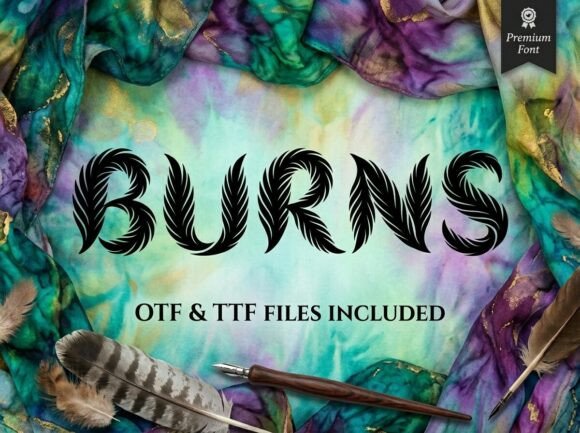
Choosing the right font for a blog header can feel like finding the perfect piece of jewelry to match an outfit—subtle, striking, and just right. For a recent lifestyle blog redesign, I found that Burns offered a quiet confidence, its fluid forms whispering elegance without shouting. This display font feels like a breath of fresh air in a world of rigid typography, blending organic movement with refined structure.
Burns for Wedding Invitations and Elegant Branding
Burns is more than a typeface—it’s a mood. When I tested it on a wedding guide, the font’s feathered curves and rhythmic flow added a sense of grace that felt entirely natural. Its soft, flowing strokes work beautifully for invitations, logos, or branding materials where a touch of sophistication is needed. The font’s personality isn’t loud, but it commands attention when used in key visual moments, making it ideal for premium events or luxury brand identities.
As a display font, Burns thrives in high-impact placements. It doesn’t need to be read in bulk; rather, it shines when used for headlines, titles, or decorative accents. Its character is best appreciated when paired with clean, readable fonts for body text, ensuring that the overall design remains legible and professional.
Burns for Recipe Ebooks and Digital Magazines
For a recipe ebook, Burns brought a sense of warmth and artistry to the title page. The font’s fluidity matched the idea of cooking as an expressive, personal act. When used in digital magazines, it helped create a visual rhythm that guided readers through content without overwhelming them. The font’s unique letterforms add a layer of personality that can elevate a publication’s identity, especially when used sparingly.
However, Burns isn’t designed for long paragraphs. Its expressive nature makes it less suitable for dense body copy, particularly in print or PDF formats where small text can lose clarity. That said, in larger sizes—like chapter openers or pull quotes—it becomes a powerful tool for storytelling and visual interest.
Burns for Newsletter Headers and Social Media Graphics
When designing a newsletter header, I was struck by how Burns balanced creativity with readability. Its gentle curves and flowing lines gave the design a modern, editorial feel without sacrificing clarity. In social media graphics, the font added a sense of authenticity, making posts feel more personal and visually engaging.
For newsletters, Burns works best as a headline or subheadline. It pairs well with sans serif fonts for body text, creating a clean, professional look while still maintaining a creative edge. Its versatility makes it a great choice for brands looking to express both style and substance in their communications.
Burns for Coaching Workbooks and Printable Planners
In a coaching workbook, Burns added a touch of refinement to section headings and motivational quotes. Its organic shape gave the document a thoughtful, intentional feel, which aligned perfectly with the content’s purpose. For printable planners, the font’s fluidity made each page feel more dynamic, encouraging users to engage with the material in a more personal way.
That said, it’s important to consider how Burns will appear in different formats. When exported as a PDF or printed, the font’s details may appear slightly softer, so testing at various sizes is recommended. For large-scale print projects, it’s best to use the font in bold or heavy weights to maintain clarity and impact.
Burns for Editorial Layouts and Content Branding
In editorial layouts, Burns acted as a subtle yet effective visual anchor. Whether used in a magazine feature or a course PDF, it helped define the tone and energy of the content. Its ability to convey emotion through form makes it a strong choice for publications that aim to connect with readers on a deeper level.
When building a content brand, Burns can help establish a consistent visual language. Its elegant, flowing style suggests creativity, care, and attention to detail—qualities that resonate well with audiences who value quality over quantity. Pairing it with a serif font for body text or a sans serif for captions ensures that the overall design remains cohesive and functional.
Before using Burns in any project, it’s wise to check the available styles, ligatures, and multilingual support. These details can affect how the font performs in different languages or complex layouts. Commercial licensing should also be considered if the font will be used in client work, templates, or paid publications.